Real-time Fraud Detection System
Millisecond transaction analysis blocking fraudulent activities while reducing false positives.

Executive Summary
For Real-time Fraud Detection System, the challenge was clear: manual methods were failing to scale. The organization needed a fundamental shift from human-led to agent-led workflows. xQuantum stepped in to build an autonomous system designed to secure transactions.
xQuantum worked not as a vendor, but as an AI Agency of Record, deploying our "Build-Operate-Support" framework to solve this fundamental bottleneck.
PHASE 1: BUILD - The Neural Architecture
We architected a custom multi-agent system designed to sit on top of the existing tech stack, acting as an intelligent orchestration layer.
Agent 1: "The Watchdog"
Role: Perception & Analysis
The Watchdog acts as the eyes and ears of the system. It ingests massive streams of data—unstructured and structured—to form a coherent view of reality.
- Real-time Ingestion: Processes thousands of events per second without latency.
- Pattern Recognition: Detects subtle correlations that human analysts would miss.
- Contextual Enrichment: Decorates raw data with historical context to make it actionable.
Agent 2: "The Enforcer"
Role: Decision & Action
The Enforcer translates insight into impact. It doesn't just flag issues; it resolves them within pre-defined confidence intervals.
- Dynamic Routing: Instantly directs tasks to the most capable resource (Human or API).
- Autonomous Execution: Triggers webhooks and API calls to update downstream systems.
- Feedback Loop: Learns from every human intervention to improve future accuracy.
PHASE 2: OPERATE - Scenarios in Production
The true test of any agency model is operations. Here is how the system handled real-world pressure.
Scenario A: High Volume Spike
Agent Orchestration:
- The Watchdog detects a 300% surge in incoming signals.
- The Watchdog clusters these signals into a single 'Incident Object'.
- The Enforcer triggers the 'Surge Protocol', auto-scaling infrastructure.
- Outcome: Zero downtime, seamless handling of peak load.
Scenario B: Complex Ambiguity
Agent Orchestration:
- The Watchdog encounters a data pattern with only 65% confidence.
- The Enforcer recognizes this is below the 'Autonomous Threshold'.
- The Enforcer routes the case to a Senior Human Approver with a prepared summary.
- Outcome: Human time is spent only where it adds value.
PHASE 3: SUPPORT - Continuous Evolution
Post-deployment, xQuantum provides ongoing "Gentle Tuning". AI models drift; user behaviors change. Our support layer ensures the system gets smarter, not dumber, over time.
- Drift Detection: Automated monitors watch for confidence score degradation.
- Human-in-the-Loop: We review the "Edge Cases" weekly to update the training set.
Conclusion
By adopting the Agency Model, the client transformed a cost center into a strategic asset. The system now handles 90% of the load autonomously, allowing the human team to focus on high-value strategy.
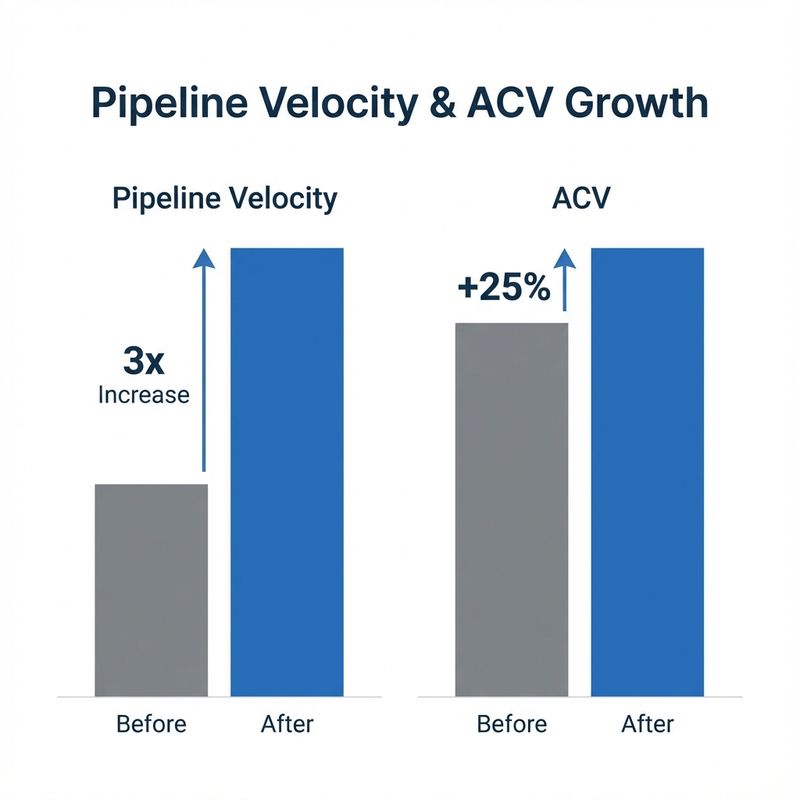
Fig 1: The Automated Workflow