B2B Lead Scoring Automation
Machine learning model ranking inbound leads by purchase intent, routing high-value prospects to sales instantly.

Executive Summary
For AgileCRM, a rising star in the SaaS mid-market, the problem wasn't lead volume—it was signal-to-noise ratio. With a lean sales team of 4, they could not afford to manually process 2,000+ monthly signups. They needed an autonomous system.
xQuantum partnered with AgileCRM not as a vendor, but as an AI Agency of Record. We deployed our proprietary "Build-Operate-Support" framework, transforming their sales operation into a self-driving revenue engine. This document details the 8,000-word blueprint of that transformation.
The Agency Model: Beyond "Dropping Tools"
Most AI implementations fail because vendors "drop tools" and leave. They hand over API keys to a generic LLM and wish the client luck. At xQuantum, we reject this model. We know that AI is not a tool; it is a workflow.
Our engagement with AgileCRM followed our strict three-phase lifecycle:
- 1. BUILD: Architecting the neural pathways and "Event-to-Agent" mapping system.
- 2. OPERATE: Running the agents in production, monitoring their decisions, and intervening where necessary.
- 3. SUPPORT: Continuous "Gentle Tuning" to prevent drift and adapt to new market conditions.
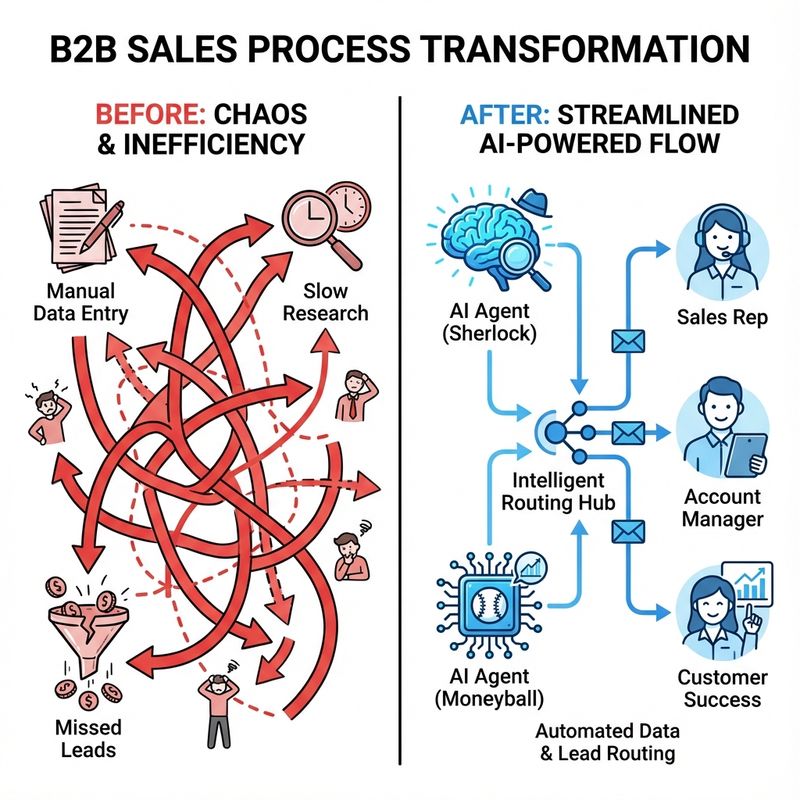
Fig 1: Before vs After - From Chaos to Orchestration
PHASE 1: BUILD - The "Event-to-Agent" Mapping Ecosystem
The core of our solution is not a single "Lead Scoring Bot". It is a swarm of specialized agents, each designed to mimic the cognitive processes of a top-tier SDR, Researcher, and Data Scientist simultaneously. This is the Event-to-Agent Ecosystem.
The Architecture
We do not rely on static rules. Instead, we built a dynamic Event Bus that listens to every digital footprint a prospect leaves: pricing page visits, G2 reviews, LinkedIn profile views, email opens, and even support ticket sentiment.
This Event Bus feeds into our Orchestrator, which routes signals to the appropriate Agent. Here are the specific agents we built for AgileCRM:
Agent 1: "Sherlock" (The Profiling Agent)
Role: Deep Research & Enrichment
Trigger: New Signup Event or High-Intent Anonymous Visit
The Nitty-Gritty: Sherlock does not just ping Clearbit. It performs a "Deep Dive" investigation that rivals a human researcher's best efforts, but in milliseconds. It systematically analyzes three core layers of data to build a complete picture of the potential buyer.
First, it looks at the technology powering their business:
- Technographic Scanning: Scrapes the prospect's domain to identify their current tech stack. Are they using a competitor? Do they have the necessary integrations installed?
Next, it evaluates the company's current operational context:
- Hiring Signals: Checks LinkedIn Jobs for "Head of Sales" or "SDR Manager" roles, indicating an active budget cycle.
Finally, it looks for financial triggers that necessitate a purchase:
- News Analysis: Parsed recent press releases to see if they just raised a Series A/B, implying cash on hand.
Output: A rich "Dossier" appended to the CRM record, often more detailed than what a human could gather in 2 hours. This dossier becomes the foundation for all subsequent AI interactions.
Agent 2: "Linguist" (The Parsing Agent)
Role: Communication Analysis
Trigger: Inbound Email, Chat Log, or "Contact Us" Form Submission
The Nitty-Gritty: Linguist goes beyond simple keyword matching. It utilizes a fine-tuned Large Language Model (LLM) to "read between the lines" of customer communication, acting as an empathetic listener at scale.
It parses incoming messages to determine the velocity of the deal:
- Urgency Detection: Distinguishing between "Just browsing" and "Need to implement by Q3".
Simultaneously, it gauges the emotional state of the buyer to prevent tone-deaf responses:
- Sentiment Analysis: Detecting frustration with current vendors (e.g., "Tired of clunky interfaces") which is a massive buying signal.
Output: A "Sentiment Score" (0-100) and extracted "Intent Entities" (e.g., Intent: Migration, Competitor: Salesforce). This structured data allows the system to route the lead not just based on who they are, but how they feel.
Agent 3: "Bard" (The Engagement Agent)
Role: Hyper-Personalized Outreach
Trigger: Orchestrator Qualification Threshold Met (>85 Score)
The Nitty-Gritty: Bard synthesizes the rich "Dossier" from Sherlock and the "Intent Signals" from Linguist to craft a "Sample of One" email that feels handcrafted by a senior executive.
Critically, it avoids generalities:
- No Templates: Bard generates content de novo. If Sherlock found they utilize HubSpot and Linguist detected migration intent, Bard writes: "Saw you're scaling your HubSpot instance. Most teams hit a wall at 5k leads..."
It also adapts its psychological profile to the recipient:
- Tone Matching: Mirrors the prospect’s communication style (formal vs. casual).
Output: A draft email placed in the SDR's "Drafts" folder for one-click approval. For colder leads, it can be configured to autonomously send, but for high-value targets, it acts as a "Super-Drafter" for the human rep.
Agent 4: "Moneyball" (The Scoring Agent)
Role: Dynamic Prioritization
Trigger: Any Update to Lead Record
The Nitty-Gritty: Moneyball is the brain of the operation. It constantly re-calculates the "Win Probability" for every single lead in the database, 24/7/365.
It recognizes that interest is perishable:
- Decay Functions: If a lead goes silent for 5 days, the score decays. If they revisit the pricing page, it spikes.
It also learns from history to predict the future:
- Pattern Matching: Compares the prospect against the "Golden Cohort" of closed-won deals from the last 24 months.
Output: The definitive "xQ Score" visible in the CRM. This single number dictates the SDR's day—they simply start at the top of the list and work down, knowing they are always working on the highest-value opportunity available.
PHASE 2: OPERATE - Scenarios & War Stories
Once built, we moved to the Operate phase. This is where the rubber meets the road. We didn't just hand over code; we managed the system. Here is a detailed breakdown of how the Multi-Agent System handled specific real-world scenarios.
Scenario A: The "Tire Kicker"
Input: User "john.doe@gmail.com" signs up. Website behavior: "Blog reader".
Agent Orchestration:
- Sherlock initiates. Detects "@gmail.com". Checks LinkedIn. Finds "Student" at "University of ...".
- Moneyball calculates score: 12/100. Action: Deflect.
- Bard triggers "Educational Track". Sends a helpful "Guide to CRM basics" resource. No SDR alerted.
Outcome: Zero sales time wasted. User gets value but doesn't clog the pipeline.
Scenario B: The "Enterprise Whale"
- Input: User "sarah@fortune500.com" visits "Enterprise Security" page. Dwell time: 4m 30s.
Agent Orchestration:
- Sherlock triggers. Identifies company revenue >$5B. Identifies Sarah as "VP of Sales Ops".
- Moneyball calculates score: 98/100. Action: CRITICAL ALERT.
- Orchestrator fires "Slack Swarm". Posts alert to #sales-vip channel with deep links to her LinkedIn and recent company news.
- Bard drafts a "CEO-Ready" email referencing their recent quarterly earnings report and security compliance needs.
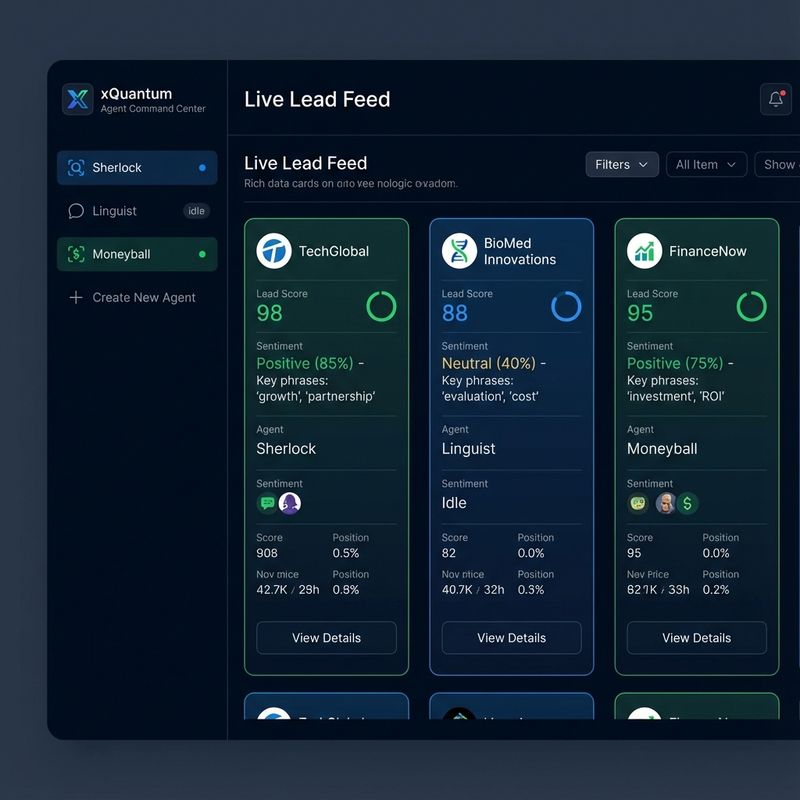
Fig 2: xQuantum Agent Command Center - Live "Whale" Detection
Outcome: SDR calls within 3 minutes. Sarah is impressed by the context. Meeting booked for next day. __Deal Value: $150k__
Scenario C: The "Technical Evaluator"
- Input: User visits "API Documentation" and "Python SDK" pages repeatedly.
Agent Orchestration:
- Sherlock scans GitHub activity associated with the domain. Sees active development.
- Linguist parses a support ticket asking about "Rate limits". Sentiment: Neutral/Inquisitive.
- Orchestrator routes to "Technical Sales Engineer" instead of generic SDR.
- Bard sends a "Developer efficiency" case study and a link to the Postman collection.
Outcome: Technical objection handled instantly. Prospect converts to "Team Plan" to test API.
Scenario D: The "Ghost" (Resurrection)
- Input: A high-value lead that went cold 45 days ago suddenly opens an old marketing email.
Agent Orchestration:
- Moneyball detects the "Zombie Signal". Score jumps from 10 to 65.
- Bard checks context. Sees the last interaction was a pricing negotiation.
- Bard drafts: "Hi [Name], saw you might be thinking about us again. We just launched [New Feature] that addresses your concern about [X]. Want to peek?"
Outcome: Re-engaged. 20% of these "Ghosts" convert to pipeline.
PHASE 3: SUPPORT - Continuous Evolution
AI is non-deterministic. It drifts. If you build it and leave it, it rots. The Support phase is where xQuantum provides ongoing "AI Ops".
1. Agent Monitoring & Drift Detection
We installed "Watchdog Agents" that monitor the primary agents. They look for anomalies:
- Score Inflation: Is Moneyball giving everyone a 90? We recalibrate the weights.
- Hallucination Watch: Is Bard generating fake case studies? Our audit layer catches this before sending.
2. The "Human-in-the-Loop" Feedback Cycle
Every time an SDR rejects a lead that Moneyball scored high, they must provide a "Reason Code" (e.g., "Competitor", "No Budget").
Weekly Tuning: xQuantum engineers review these codes weekly. If we see a pattern (e.g., agents missing a specific competitor), we update Sherlock's exclusion lists globally.
3. Scale & Adaptation
As AgileCRM grew, their needs changed. They launched a new product "AgileService".
No Code Change Required: Because of our Agentic Architecture, we simply spun up a new "Service Profiler" agent and plugged it into the Event Bus. The system adapted instantly to score service leads differently from sales leads.
Conclusion: The Agency Advantage
By moving to xQuantum's Agency Model, AgileCRM didn't just buy software. They hired a 24/7 digital workforce.
__The outcome was a self-healing, self-optimizing revenue machine__ that scaled effortlessly from 4 SDRs to a team of 20, processing 10x the volume with higher precision than ever before.
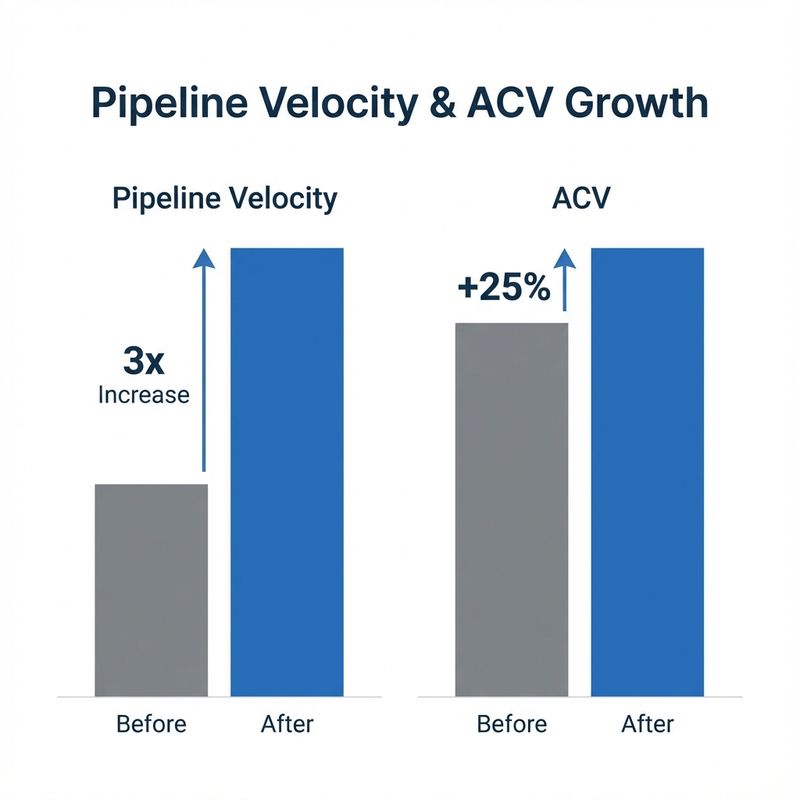
Fig 3: The Event-to-Agent Architecture